
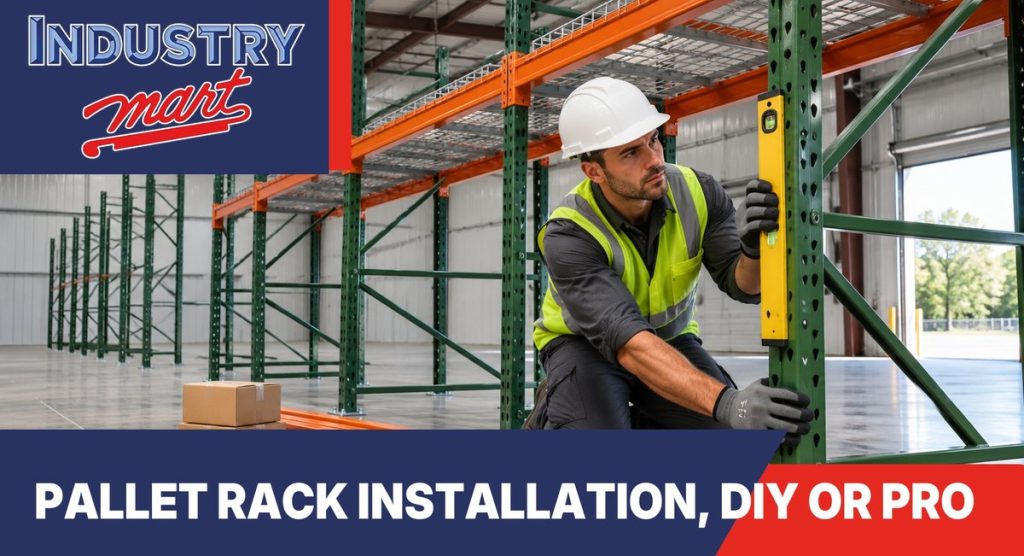
A lot of rack goes up on a Saturday.
The frames arrive on a flatbed, somebody rents a scissor lift, and by Sunday night there are bays standing where the floor stacks used to be. Sometimes that weekend crew does fine work. Other times the frames lean, the anchors went into whatever spot the drill found, and the first loaded pallet shows everyone where the shortcuts were.
Pallet rack installation is not complicated, but it is unforgiving. The steel will hold what the manufacturer rated it for only if it is set the way the manufacturer designed it. This is how to tell which jobs a capable in-house crew can handle and which ones should go to people who set rack for a living.
Key Takeaways
- Small, low, single-maker teardrop jobs are where an in-house crew has its best shot.
- Every column gets anchored, and every frame gets checked for plumb.
- Storage over 12 feet, structural or high-density rack, and teardowns are pro work.
- Ask about the permit, the slab and the load plaque before the first frame stands up.
What a Correct Installation Actually Involves
Rack installation is three jobs that look like one. First the layout: chalk lines for every row, aisle widths measured against the forklifts that will run them, flue spaces left where the sprinkler design calls for them. Then the frames: stood up, set on the lines, shimmed level and checked for plumb. Then the beams: set at the heights the load plan calls for, with every safety lock seated.
The industry standard for steel storage rack, ANSI MH16.1 from the Rack Manufacturers Institute, puts numbers on the part that weekend crews skip. Rack columns are anchored to the floor with bolts sized for the forces they have to resist, and a column may be no more than 1/240 of its height out of plumb. On a 16-foot frame that is 0.8 inch from top to bottom. The same standard calls for a permanent load plaque, at least 50 square inches, posted where the people loading the rack can see it.
None of that is exotic. It needs the right tools, the manufacturer’s capacity charts, and a crew that will not skip the checks:
- a level or laser on every frame, not every third one
- a torque check on every anchor before any pallet goes up
When DIY Works
A capable maintenance crew can set new selective teardrop rack when the job stays small and simple. Think a few bays along one wall, storage tops under 12 feet, a slab you know is sound, and a layout that came from the supplier with beam elevations already worked out. Teardrop beams lock into the uprights without bolts, which is why this type of rack is the most forgiving to set up. Follow the manufacturer’s installation instructions and check your local fire code before the first frame stands.
The crew still needs a lift rated for the work, a hammer drill with the right bit for the anchors, a torque wrench, and two people at every frame while it goes up. If the rack is used, identify it before anything goes up. Mixing parts from two manufacturers is one of the most common DIY mistakes, and telling your rack’s maker apart by the column punch takes minutes and saves the guesswork.
The honest test is simple. If your crew can name the anchor size, the beam elevations and the plumb tolerance before they start, they have done the homework. If they are planning to figure it out on the floor, the job belongs to someone else.
When You Need a Pro Crew
Some jobs move past what a weekend crew should take on, and the first one is height. The International Fire Code, which local fire marshals enforce, treats combustible storage in racks as high-piled once the top of the storage is above 12 feet. Nashville’s Fire Marshal’s Office, for example, requires an operational permit for any high-piled storage area over 500 square feet, and the code calls for construction documents that show the storage layout. Once plans and a fire marshal are part of the job, the layout has to be right on paper before it is right on the floor.
The other triggers are the type of system and the state of the building. Structural rack bolts together and weighs more per piece. Pushback, pallet flow and carton flow need lanes set within tight tolerances or carts hang up and pallets stall. Taking down an existing system, or moving it to a new building, means unloading, dismantling and reinstalling steel that already carries history. And a slab nobody has checked is a guess under every anchor, so settle that with a structural engineer before anyone installs.
Installing those systems, and taking down existing ones, is the work of our professional rack installation crew. Its installations cover teardrop and structural pallet rack, cantilever, wide span and industrial shelving.
Questions to Ask Before Anyone Sets a Frame
Whether the crew is yours or a contractor’s, the same answers should exist on paper before the first upright stands:
- Does the job need a permit? Ask the local fire marshal or building department, especially for storage tops above 12 feet.
- How thick is the slab, and what shape is it in? Thickness and condition decide which anchors will hold.
- Where are the beam elevations written down? The load plan sets them, and the capacity chart has to match them.
- Who posts the load plaque? Someone has to, and it should go up the day the rack does.
Two more questions tell you whether a crew has done this before:
- who checks plumb and anchor torque before the walkthrough
- what happens if a frame arrives damaged
Frequently Asked Questions
What should be checked once the rack is loaded?
Walk the row soon after the rack takes its first full load. Look for frames that have started to lean, beam locks that are missing or loose, and a load plaque that someone moved or covered. If a frame leans or a beam has shifted, unload that bay and have it checked before it carries pallets again.
How long does a professional installation take?
It depends on the bay count, the kind of rack and how ready the building is. A clear floor with material on site goes fastest, and a teardown or a permit review adds time before any new frame goes up.
Can my crew install used rack?
It can be, if it is selective teardrop from one maker, the capacity is known, and every component is straight and undamaged. Mixed lots, bent members and unknown capacity are where a pro earns the fee.
Who handles the permit?
It depends on the jurisdiction. Your city or county fire prevention office can say who has to apply, and that should be settled with your installer before the rack is ordered.
Is a DIY install covered if something fails?
Check your insurance policy and the manufacturer’s terms.
Talk to the People Who Set Rack for a Living
Since 1979, Industry Mart has been selling new and used rack, buying used rack and setting it up. Industry Mart holds a Tennessee general contractor license (#86487) and has completed thousands of rack installations across the Southeast, with an installation crew that brings more than 30 years of experience to every job. Customers can see samples in the 30,000-square-foot showroom in Cookeville, and an almost 100,000-square-foot warehouse there is the heart of the operation.
Tell us how many bays, what type of rack and how tall the storage will be. Ask for a quote on pallet rack installation or call 931-537-3161.
Plan the Install Before the Flatbed Arrives
Write down the height, the system type and the condition of the slab, then decide who sets the steel. A small teardrop job can stay in house. Anything taller, heavier or headed for a fire marshal’s desk deserves a crew that sets rack for a living. Rack will carry its rated load shift after shift, but only the way it was installed.
Related Articles
- Pallet Rack Weight Capacity: What Your Beams Can Really Hold, for setting beam elevations against the capacity chart.
- Pallet Rack Layout: How Aisle Widths Decide How Much You Can Store, for the chalk lines before the first frame.
- Buying Used Pallet Rack: What to Check Before You Pay, before a used lot becomes a DIY install.